On this page
What is the aorta?
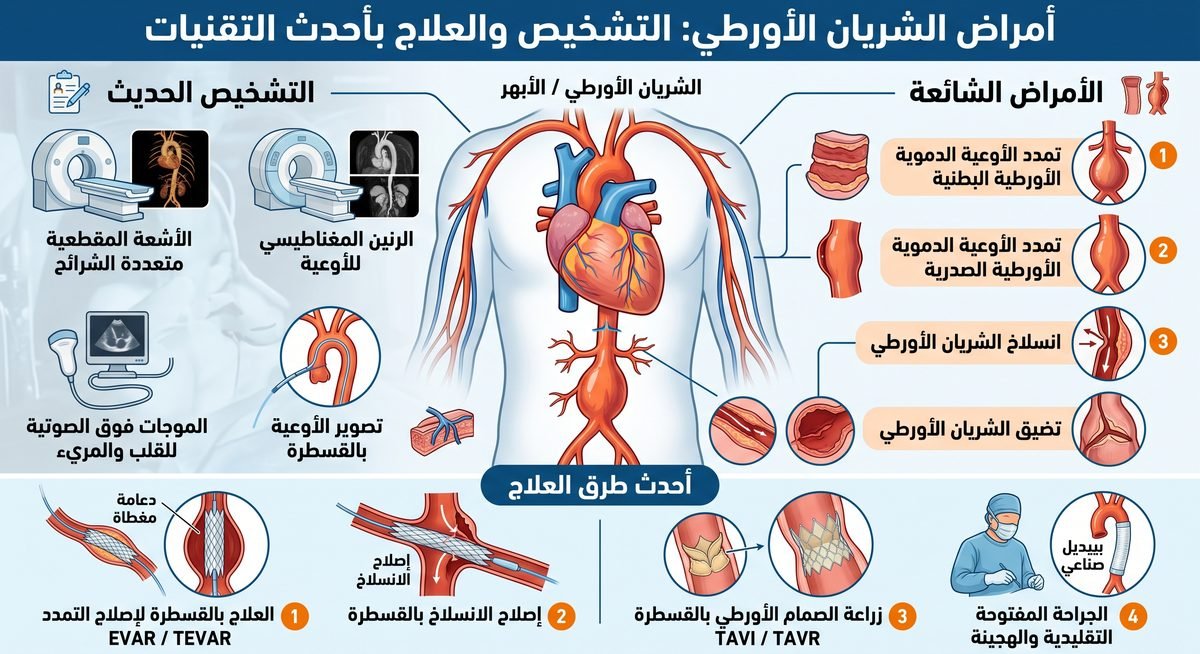
The aorta arises directly from the heart and runs through the chest and abdomen, carrying oxygenated blood to the rest of the body. Because of its size and central position, its health is essential for every vital organ, and any weakness, dilatation or tear in its wall is a serious medical condition.
The main diseases of the aorta
Several conditions affect the aorta; the most serious are:
- Aortic aneurysm: an abnormal widening of the wall that may rupture as it grows.
- Aortic dissection: a tear in the inner layer of the wall — an emergency.
- Aortic narrowing: obstruction of blood flow to parts of the body.
- Atherosclerosis: fatty deposits that weaken the wall and raise the risk of complications.
Symptoms and warning signs
Many aortic diseases cause no clear symptoms early on and are found incidentally during other tests. As disease progresses, chest, back or abdominal pain, a pulsating sensation in the abdomen or shortness of breath may appear. Rupture or dissection causes sudden, severe pain that requires emergency treatment.
Modern treatment options
Treatment of aortic disease has advanced greatly and is no longer limited to open surgery:
- Regular surveillance: for small aneurysms, with control of risk factors such as blood pressure.
- Stent-grafts: repair from inside the artery through a small incision, without major surgery.
- Surgery: for advanced or emergency cases to repair or replace the diseased segment.
Frequently asked questions
Is an aortic aneurysm always dangerous?
It depends on size and growth rate; small aneurysms are monitored, while large ones may need repair to prevent rupture.
Can aortic disease be prevented?
Controlling blood pressure and cholesterol, stopping smoking and regular check-ups greatly reduce the risk.
Is stent-graft treatment better than surgery?
It depends on the case; stent-grafts are less invasive with faster recovery, but some cases need surgery.
Who is most at risk?
Smokers, people with high blood pressure or cholesterol, older adults and those with a family history.
Many aortic diseases show no symptoms until advanced stages — early screening can save lives.
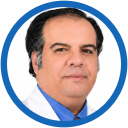
Prof. Ahmed Samir Hosny
Professor of Vascular & Endovascular Surgery — Kasr Al Ainy, Cairo University
Professor of Vascular & Endovascular Surgery at Kasr Al Ainy, Cairo University. Fellowship in peripheral endovascular interventions (Kiel, Germany) and aortic surgery fellowship (Cologne, Germany); Member of the Royal College of Surgeons of Edinburgh.
Meet the doctor