On this page
Why the foot in particular?
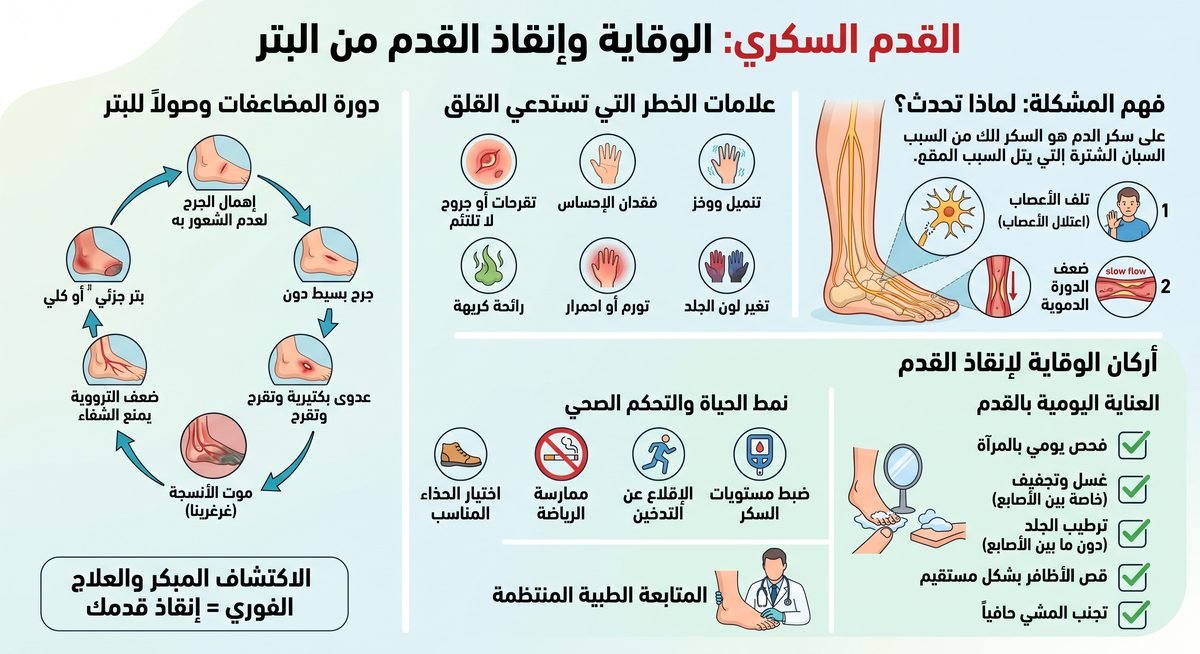
Diabetes affects the feet in two ways: neuropathy, which removes sensation so the patient does not feel a wound, and poor blood supply from narrowed arteries, which slows healing and increases the risk of infection.
Together these factors can turn a small wound into a serious problem very quickly.
Signs you should not ignore
- Tingling or loss of sensation in the feet.
- A cold foot or change in its colour.
- Wounds or ulcers that do not heal.
- Swelling, redness or local warmth.
- Leg pain on walking that eases with rest.
Daily foot care
Prevention is the foundation of diabetic foot care. Inspect your feet every day, wash them in lukewarm water and dry them well, especially between the toes, moisturise the skin, wear comfortable shoes and cotton socks, and never walk barefoot — even at home.
The role of the vascular surgeon
Many diabetic foot problems are linked to poor blood supply from narrowed arteries. The vascular surgeon restores blood flow to the foot with angioplasty or bypass surgery, helping wounds heal and saving the limb.
Frequently asked questions
When should I see a doctor urgently?
Any wound that does not heal within days, or redness and discharge, needs prompt review.
Can amputation be avoided?
Yes, in many cases, through early detection, specialist treatment and restoring blood flow.
Is every diabetic patient at risk?
The risk is higher with poor sugar control; regular care reduces it.
How often should I check my feet?
Daily at home, with regular check-ups by your doctor.
Most diabetic foot amputations can be prevented with prevention, early detection and specialist treatment.

Prof. Ahmed Samir Hosny
Professor of Vascular & Endovascular Surgery — Kasr Al Ainy, Cairo University
Professor of Vascular & Endovascular Surgery at Kasr Al Ainy, Cairo University. Fellowship in peripheral endovascular interventions (Kiel, Germany) and aortic surgery fellowship (Cologne, Germany); Member of the Royal College of Surgeons of Edinburgh.
Meet the doctor