On this page
What is the carotid artery?
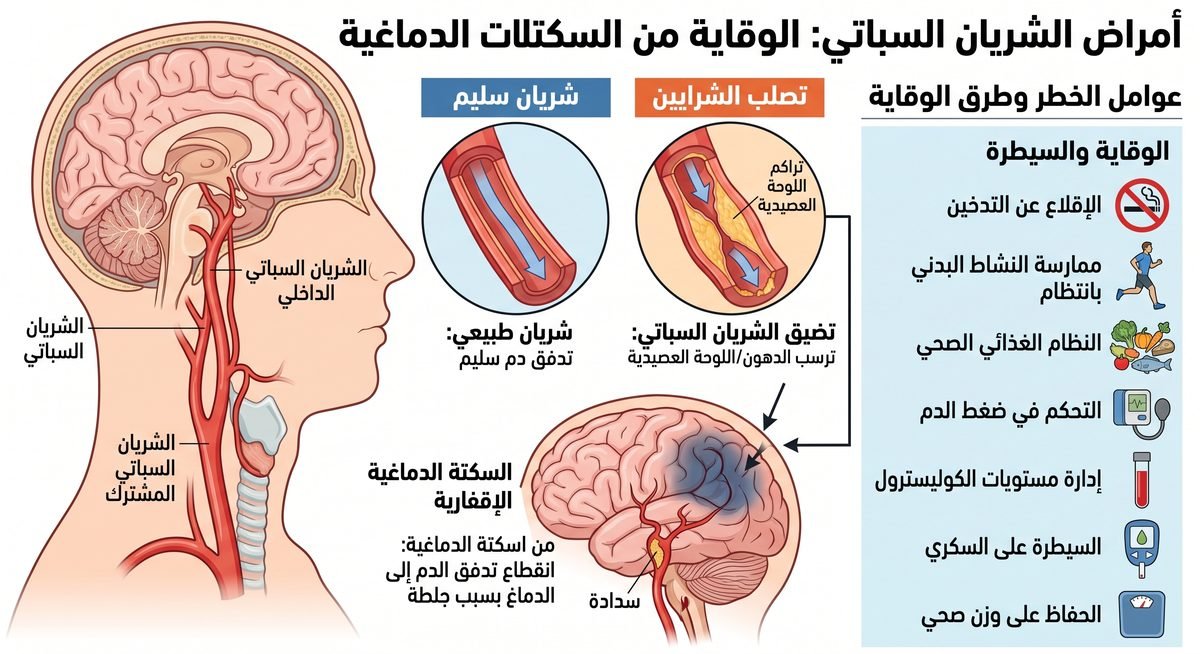
The carotid arteries lie on each side of the neck and deliver oxygenated blood to the brain. Any narrowing or blockage reduces blood flow to the brain and raises the risk of clots that can travel and cause a stroke.
Causes of carotid narrowing
The most common cause is atherosclerosis, in which fat and cholesterol deposit on the artery wall, forming plaques that narrow it. Smoking, high blood pressure, diabetes and high cholesterol increase the risk.
Symptoms and warning signs
Many cases show no symptoms until a stroke occurs. Warning signs of stroke include:
- Sudden weakness or numbness of the face or limbs on one side.
- Sudden difficulty speaking or understanding.
- Sudden loss of vision in one eye.
- Sudden dizziness or loss of balance.
Diagnosis and treatment
Carotid narrowing is diagnosed with ultrasound and imaging. Treatment depends on the degree of narrowing: from risk factor control and medication in mild cases to stenting or surgery in advanced cases to remove the narrowing and prevent stroke.
Frequently asked questions
Is carotid narrowing dangerous?
Yes, it is a major cause of stroke, but early treatment prevents it.
How do I know if I have it?
Many cases are silent, so screening is advised for people with risk factors.
Is stenting available?
Yes, carotid stenting is an effective option in selected cases.
How can I protect myself?
By stopping smoking and controlling blood pressure, blood sugar and cholesterol.
Carotid narrowing may cause no symptoms until a stroke happens — early screening prevents it.

Prof. Ahmed Samir Hosny
Professor of Vascular & Endovascular Surgery — Kasr Al Ainy, Cairo University
Professor of Vascular & Endovascular Surgery at Kasr Al Ainy, Cairo University. Fellowship in peripheral endovascular interventions (Kiel, Germany) and aortic surgery fellowship (Cologne, Germany); Member of the Royal College of Surgeons of Edinburgh.
Meet the doctor