On this page
What happens in a dissection?
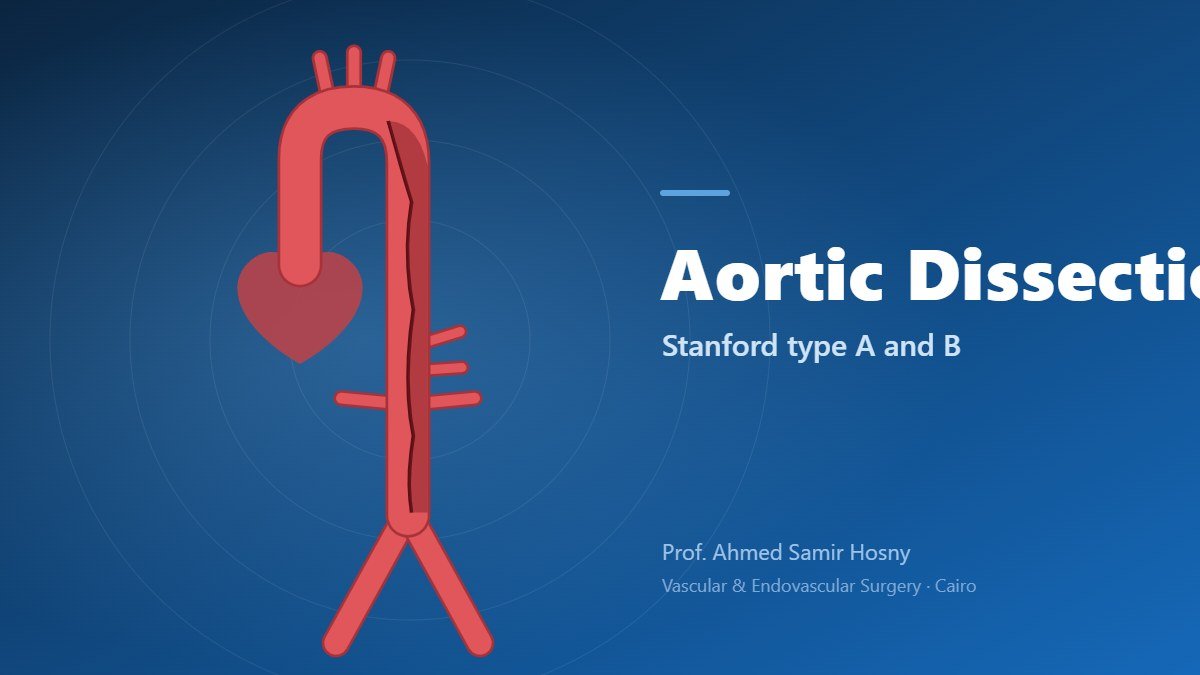
The aortic wall has three layers. When the inner layer tears, high-pressure blood enters between the layers and forces a new path (the false lumen) alongside the true lumen. The dissection may extend a long way; it can compress the true lumen and reduce blood flow to organs, or weaken the wall until it ruptures.
Symptoms
- Sudden, very severe chest pain or pain between the shoulder blades, often described as “tearing” or “stabbing”.
- Pain moving from the chest to the back or abdomen.
- A difference in blood pressure or pulse between the arms.
- Fainting, shortness of breath or heavy sweating.
- Stroke-like symptoms, sudden leg weakness, or abdominal pain from reduced blood flow.
These symptoms need emergency care immediately.
Types: A and B
- Type A (Stanford A): involves the ascending aorta near the heart. It is the most dangerous and usually needs emergency heart surgery.
- Type B (Stanford B): starts beyond the head and arm arteries and involves the descending aorta. It is usually treated with medication and blood pressure control, or with a thoracic stent-graft (TEVAR) when complications occur.
Causes and risk factors
- Uncontrolled high blood pressure — the most important factor.
- Connective tissue disorders such as Marfan and Loeys–Dietz syndromes.
- Bicuspid aortic valve and pre-existing aortic aneurysm.
- Cocaine or stimulant use, and severe trauma.
- Rarely, pregnancy in predisposed women.
Diagnosis
The key test is a contrast CT angiogram of the entire aorta, which shows the type and extent of the dissection, the entry tear and the state of the branch arteries. Transoesophageal echocardiography may be used in some situations.
Treatment
- Immediate medication: lowering blood pressure and heart rate (usually with beta-blockers) and pain relief to reduce stress on the wall.
- Emergency surgery for Type A.
- TEVAR for complicated Type B, and in selected high-risk uncomplicated Type B to improve long-term outcomes.
Frequently asked questions
Can people survive an aortic dissection?
Yes. With rapid diagnosis and appropriate treatment many patients survive and return to their lives with regular follow-up.
Is dissection pain like angina?
They can be similar, but dissection pain is usually more severe and sudden and spreads to the back; distinguishing them needs urgent hospital assessment.
What is the best prevention?
Regular blood pressure control, stopping smoking, monitoring any known aortic aneurysm and screening relatives in inherited conditions.
Sudden severe chest pain spreading to the back — call emergency services immediately; do not wait.

Prof. Ahmed Samir Hosny
Professor of Vascular & Endovascular Surgery — Kasr Al Ainy, Cairo University
Professor of Vascular & Endovascular Surgery at Kasr Al Ainy, Cairo University. Fellowship in peripheral endovascular interventions (Kiel, Germany) and aortic surgery fellowship (Cologne, Germany); Member of the Royal College of Surgeons of Edinburgh.
Meet the doctor