On this page
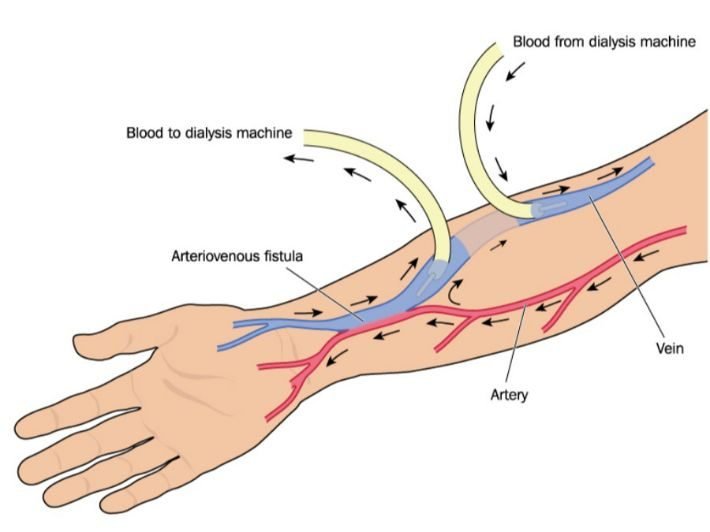
What is an AV fistula?
It is a surgical connection between an artery and a vein, usually in the arm. The vein enlarges and strengthens so that it can tolerate repeated dialysis needles. It is the best and longest-lasting option compared with temporary catheters.
Why is it the best choice?
- Lower infection risk than catheters.
- Lasts for years with good care.
- Provides adequate blood flow for effective dialysis.
- Fewer long-term complications.
Caring for your fistula
- Feel the fistula’s thrill (buzz) every day to make sure it is working.
- Keep the area clean and avoid injuries.
- Avoid pressure on the arm (watches, tight sleeves, blood pressure cuffs).
- Tell your doctor immediately if the thrill disappears or there is redness or pain.
Possible problems
A fistula may develop narrowing, clotting or infection that reduces its function. Early detection through follow-up allows treatment with angioplasty or another procedure to save it.
Frequently asked questions
When can the fistula be used?
It needs time to mature before use; your doctor decides when.
How long does a fistula last?
Many years with good care and follow-up.
What if the thrill stops?
Contact your doctor immediately, because it may have clotted.
Can a blocked fistula be repaired?
Yes, in many cases with angioplasty or surgery.
An AV fistula is a dialysis patient’s lifeline — caring for it keeps it working.

Prof. Ahmed Samir Hosny
Professor of Vascular & Endovascular Surgery — Kasr Al Ainy, Cairo University
Professor of Vascular & Endovascular Surgery at Kasr Al Ainy, Cairo University. Fellowship in peripheral endovascular interventions (Kiel, Germany) and aortic surgery fellowship (Cologne, Germany); Member of the Royal College of Surgeons of Edinburgh.
Meet the doctor