On this page
What is balloon angioplasty?
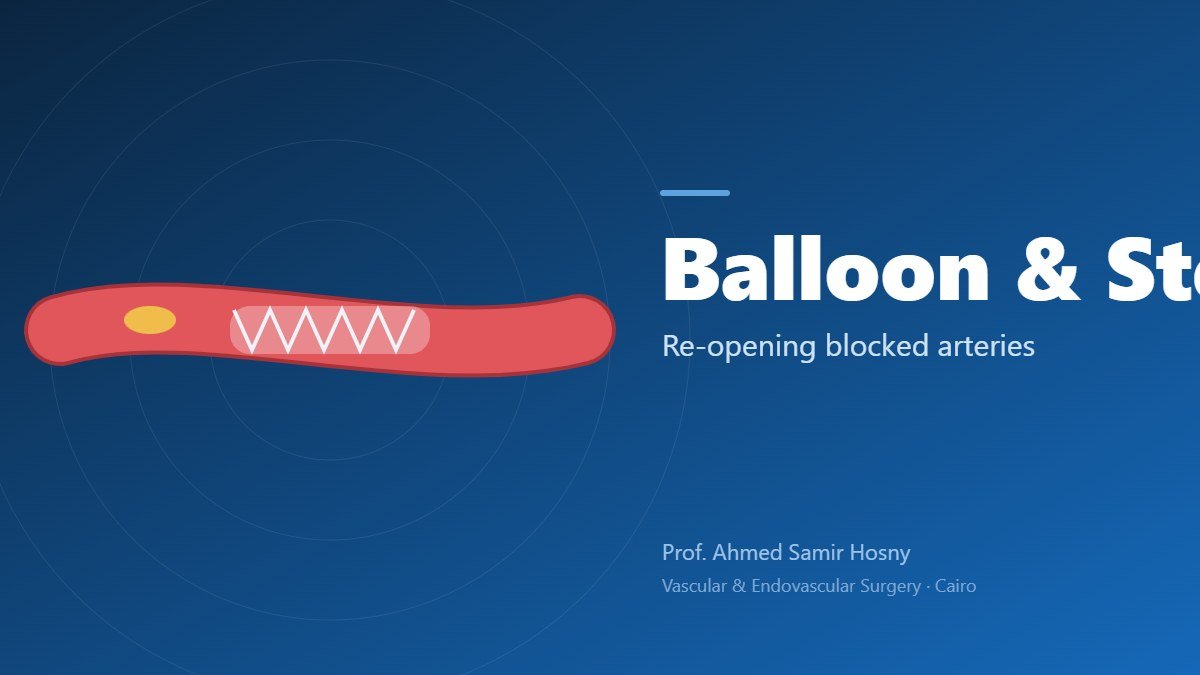
A small balloon is introduced through a catheter to the narrowed segment of the artery, then inflated to widen it and press the plaque against the wall, restoring blood flow. It is often followed by placing a stent to secure the result.
What is a stent?
A stent is a small mesh tube left inside the artery after widening to keep it open and prevent re-narrowing. Types include drug-eluting stents, which reduce the chance of the artery narrowing again.
Uses
- Narrowed leg and limb arteries.
- Carotid artery narrowing in selected cases.
- Some aortic diseases.
- Dialysis access for kidney patients.
After the procedure
Patients must take antiplatelet medication to keep the stent open, with regular follow-up. Lifestyle change and risk factor control extend the life of the stent and prevent blockage.
Frequently asked questions
Is the stent permanent?
Yes, it remains in the artery permanently to keep it open.
Will I feel it?
No, you will not notice it in daily life.
Can it become blocked?
This happens in a small proportion, so medication and follow-up are important.
Is the procedure painful?
It is done under local anaesthesia with minimal pain and discomfort.
A stent keeps the artery open after widening — a smart solution with minimal surgery.

Prof. Ahmed Samir Hosny
Professor of Vascular & Endovascular Surgery — Kasr Al Ainy, Cairo University
Professor of Vascular & Endovascular Surgery at Kasr Al Ainy, Cairo University. Fellowship in peripheral endovascular interventions (Kiel, Germany) and aortic surgery fellowship (Cologne, Germany); Member of the Royal College of Surgeons of Edinburgh.
Meet the doctor