On this page
What is TEVAR?
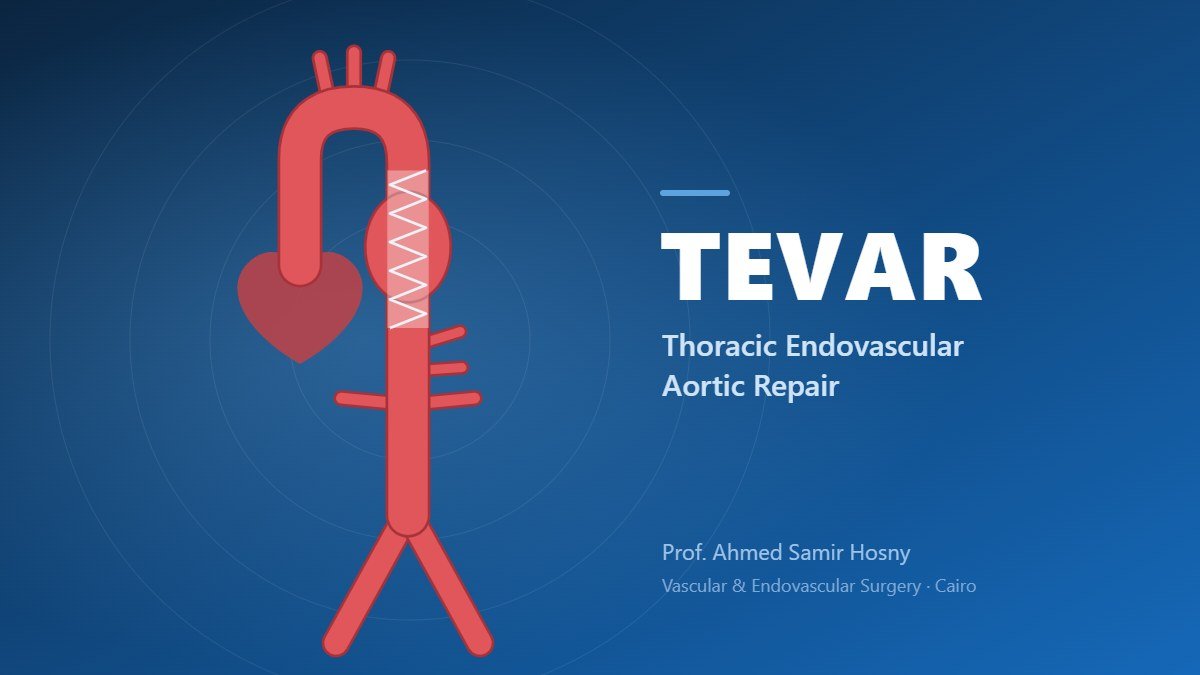
TEVAR stands for Thoracic Endovascular Aortic Repair: a covered stent-graft is placed inside the descending thoracic aorta — the segment running behind the heart along the spine. The graft lines the diseased segment from within, redirecting blood flow through it and protecting the weakened or torn wall.
When is TEVAR used?
- Descending thoracic aortic aneurysm reaching about 5.5–6 cm, growing quickly or causing symptoms.
- Type B aortic dissection with complications such as reduced blood flow to the gut, kidneys or legs, persistent pain, rapid expansion or rupture.
- Traumatic aortic injury after accidents.
- Penetrating aortic ulcer and intramural haematoma in selected cases.
How is the procedure done?
It is usually performed under anaesthesia. The graft is introduced through the femoral artery, guided by X-ray to its target and deployed so it seals in healthy aorta above and below the diseased segment. Sometimes the graft must cover the origin of the left subclavian artery; a small bypass may then be performed before or during the procedure, or a branched device used.
Possible risks
- Spinal cord ischaemia: may cause leg weakness. It is uncommon but a key concern, so blood pressure is kept adequate after the procedure and, in high-risk patients, cerebrospinal fluid drainage may be used.
- Stroke, uncommon, particularly when working near the aortic arch.
- Complications at the groin access site.
- Endoleak or graft migration, detected on follow-up.
Recovery after TEVAR
Patients usually spend a day in intensive care for monitoring and go home after two to five days in planned cases. Follow-up CT is performed at one month, then at six or twelve months and periodically thereafter, together with strict blood pressure control.
Frequently asked questions
Is TEVAR better than open chest surgery?
In anatomically suitable cases TEVAR has fewer early complications and a faster recovery, which is why it has become the preferred treatment for most descending thoracic aortic disease.
What is the risk of paralysis?
The risk of spinal cord ischaemia is low and increases with the length of aorta covered; preventive measures are taken in higher-risk patients.
Will I need medication afterwards?
Usually blood pressure medication, an antiplatelet and a cholesterol-lowering drug, depending on your condition.
Today the thoracic aorta can often be treated through a small opening in the groin — without opening the chest.

Prof. Ahmed Samir Hosny
Professor of Vascular & Endovascular Surgery — Kasr Al Ainy, Cairo University
Professor of Vascular & Endovascular Surgery at Kasr Al Ainy, Cairo University. Fellowship in peripheral endovascular interventions (Kiel, Germany) and aortic surgery fellowship (Cologne, Germany); Member of the Royal College of Surgeons of Edinburgh.
Meet the doctor