On this page
Phases of dissection
- Acute: the first 14 days.
- Subacute: from two weeks to about 90 days.
- Chronic: after three months.
The aortic wall responds differently to a stent-graft in each phase; it is more flexible and able to remodel in the earlier phases.
Complicated dissection
A dissection is called complicated when any of the following is present, and urgent intervention — usually TEVAR — is then the appropriate treatment:
- Rupture or bleeding around the aorta.
- Malperfusion of the bowel, kidneys, legs or spinal cord.
- Persistent or recurrent pain despite treatment.
- High blood pressure resistant to several drugs.
- Rapid enlargement of the aortic diameter.
Uncomplicated dissection
It is treated with medication under monitoring: lowering systolic pressure usually below 120 mmHg and heart rate to about 60 beats per minute, with pain control. Some patients have high-risk features that increase the chance of later aortic enlargement, such as a large initial aortic diameter, a wide false lumen or a large entry tear. In these patients a stent-graft in the subacute phase may be advised to improve long-term results.
How does the stent-graft help?
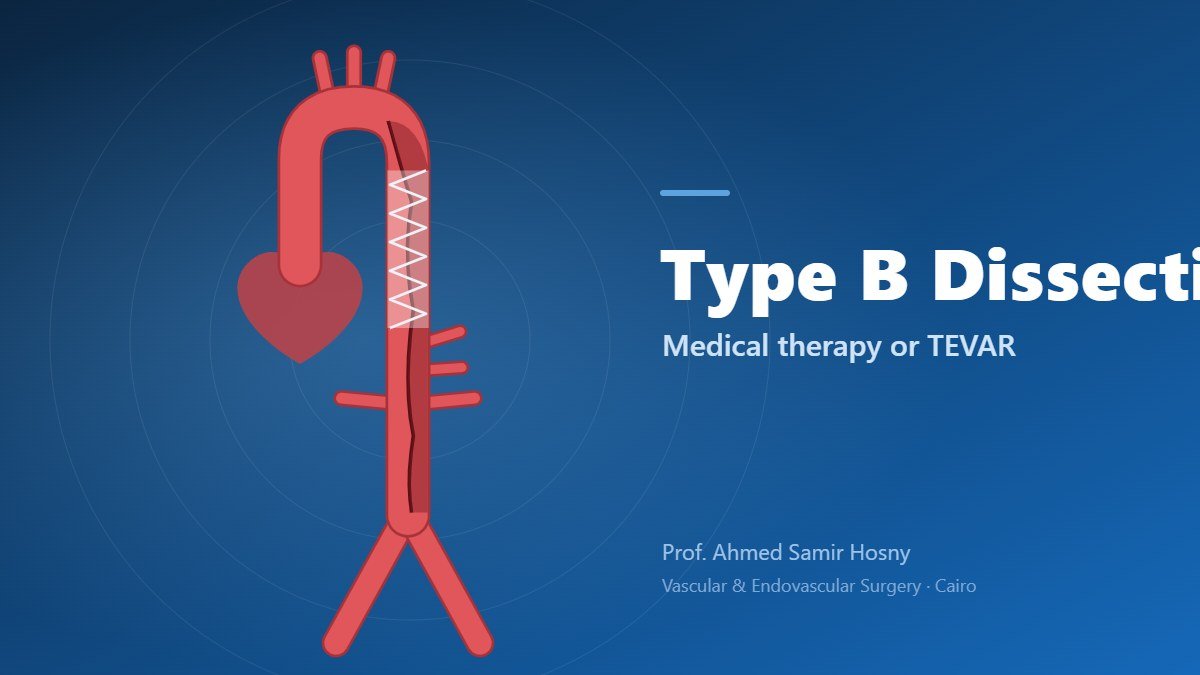
The graft covers the primary entry tear, stopping flow into the false lumen and allowing the true lumen to expand. Over time the false lumen may thrombose and shrink — known as aortic remodelling — reducing the future risk of aneurysm and rupture.
Follow-up
Whether treated with medication or a stent-graft, patients need regular CT scans (usually at one month, 3–6 months and 12 months, then yearly) to monitor the aortic diameter and the false lumen.
Frequently asked questions
Does every Type B dissection need a stent-graft?
No. Many uncomplicated cases are managed with medication and surveillance; stent-grafts are reserved for complicated or high-risk cases.
What is the best timing for TEVAR in uncomplicated cases?
Usually the subacute phase once the patient is stable; the specialist team decides the timing for each case.
Can Type B become dangerous later?
Yes, the aorta may enlarge over time, which is why regular imaging and blood pressure control are essential.
Strict blood pressure control is the cornerstone of treatment for every aortic dissection patient.

Prof. Ahmed Samir Hosny
Professor of Vascular & Endovascular Surgery — Kasr Al Ainy, Cairo University
Professor of Vascular & Endovascular Surgery at Kasr Al Ainy, Cairo University. Fellowship in peripheral endovascular interventions (Kiel, Germany) and aortic surgery fellowship (Cologne, Germany); Member of the Royal College of Surgeons of Edinburgh.
Meet the doctor