On this page
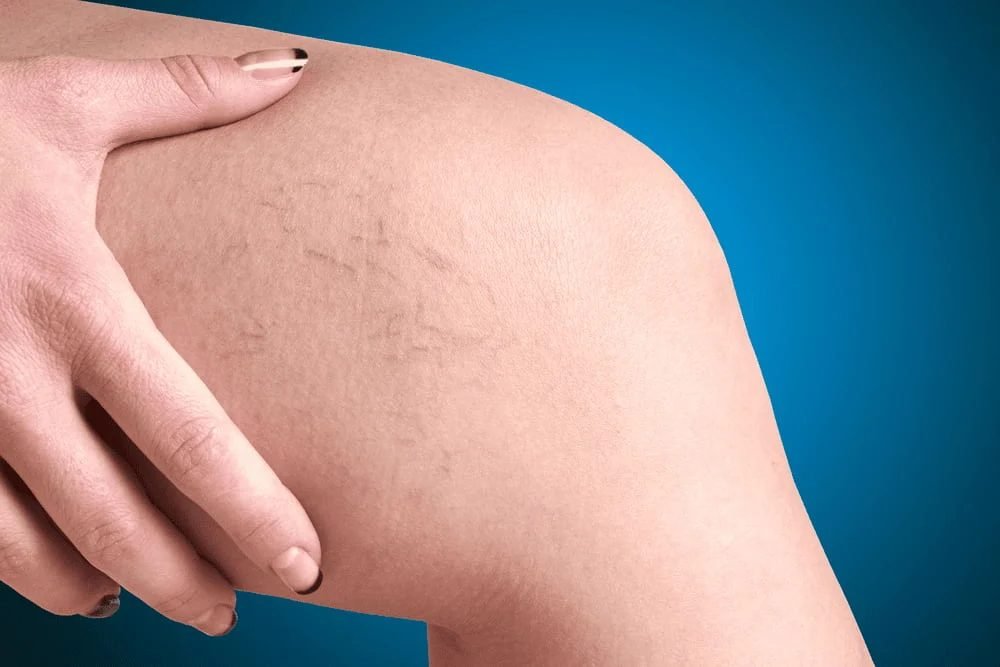
What are spider veins?
They are small dilated blood vessels close to the skin surface, forming thin branching lines like a spider’s web. They differ from varicose veins in being smaller and less raised, and they usually cause no symptoms.
Causes
- Heredity.
- Prolonged standing.
- Hormonal changes and pregnancy.
- Ageing.
- Sun exposure (on the face).
How they differ from varicose veins
Spider veins are superficial, thin and mostly cosmetic, while varicose veins are larger, raised and may cause symptoms and indicate deeper venous insufficiency. Both may coexist, so an examination defines the condition precisely.
Treatment
Sclerotherapy injections and surface laser are among the most effective and safe treatments, done in simple sessions without surgery. Your doctor chooses the best method according to the size and location of the veins.
Frequently asked questions
Is treatment painful?
These are simple procedures with minimal pain and almost no downtime.
Do they come back after treatment?
New veins may appear, but treatment clearly improves appearance.
Are they dangerous?
Usually cosmetic, but an examination excludes underlying venous insufficiency.
How many sessions will I need?
It depends on the number of veins, and your doctor will advise after examination.
Spider veins are usually cosmetic, but a specialist assessment excludes hidden venous insufficiency.

Prof. Ahmed Samir Hosny
Professor of Vascular & Endovascular Surgery — Kasr Al Ainy, Cairo University
Professor of Vascular & Endovascular Surgery at Kasr Al Ainy, Cairo University. Fellowship in peripheral endovascular interventions (Kiel, Germany) and aortic surgery fellowship (Cologne, Germany); Member of the Royal College of Surgeons of Edinburgh.
Meet the doctor