On this page
Warning signs
- Sudden, severe and persistent pain in the abdomen, lower back or flank.
- Dizziness, fainting, pallor and cold sweats.
- Rapid heartbeat and low blood pressure.
- A pulsating mass in the abdomen in some patients.
Back pain may be mistaken for kidney colic or a slipped disc, so an aneurysm should be considered in older people and smokers.
What should you do?
- Call an ambulance immediately or go to the nearest hospital with vascular surgery.
- Do not eat or drink anything.
- Tell the medical team if you know you have an aortic aneurysm.
Emergency treatment
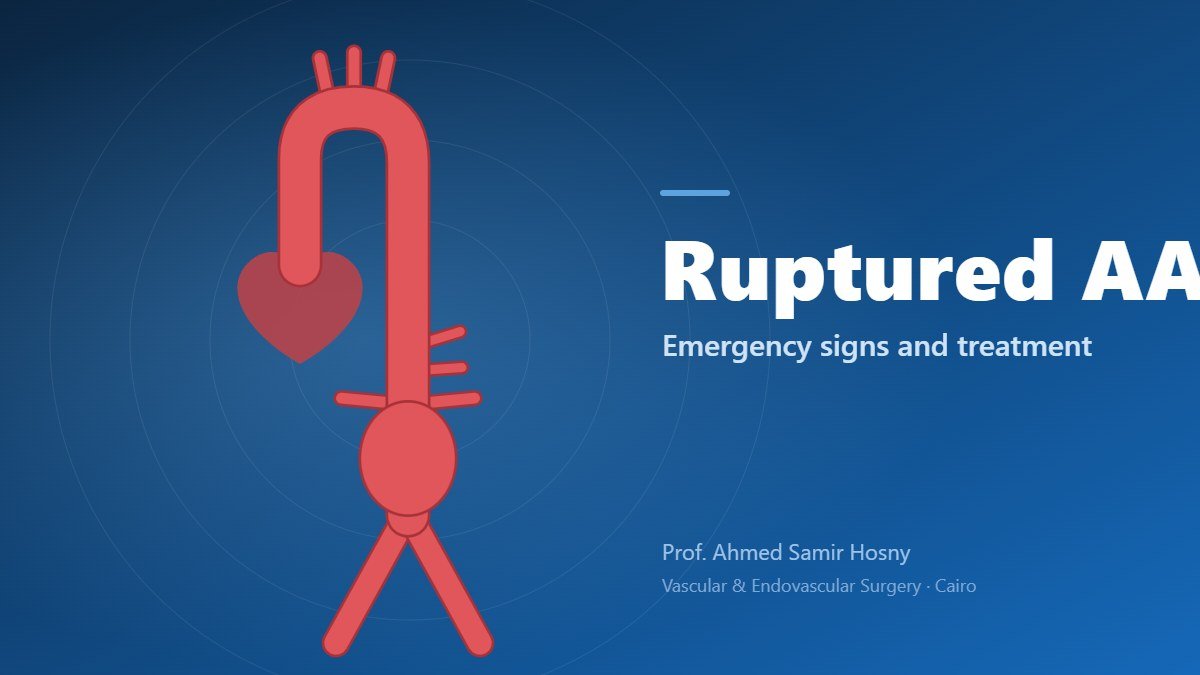
An urgent CT scan is performed if the patient’s condition allows, followed by immediate repair. When anatomy is suitable, many centres prefer emergency EVAR because it is less stressful for the body; otherwise open surgery is performed. While waiting, a relatively low blood pressure is tolerated (permissive hypotension) to limit bleeding.
A painful aneurysm before rupture
Sometimes an aneurysm causes new pain without rupturing — a “symptomatic aneurysm”. This is also urgent and needs hospital admission and repair within a short time, because the risk of rupture is high.
Prevention
- Ultrasound screening for men from age 65 and for those with a family history.
- Keeping to surveillance for any known aneurysm.
- Planned repair when the threshold size is reached.
- Stopping smoking and controlling blood pressure.
Frequently asked questions
Can someone survive a ruptured aneurysm?
Yes, especially with rapid transfer to a specialist centre, but the risk is high — which is why prevention and planned repair matter so much more.
Do small aneurysms rupture?
Very rarely; the risk rises sharply as the diameter exceeds 5.5 cm.
Does a painful aneurysm mean it has ruptured?
Not always, but it is a danger sign that needs urgent hospital assessment.
Planned repair at the right time is far safer than emergency surgery after rupture.
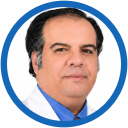
Prof. Ahmed Samir Hosny
Professor of Vascular & Endovascular Surgery — Kasr Al Ainy, Cairo University
Professor of Vascular & Endovascular Surgery at Kasr Al Ainy, Cairo University. Fellowship in peripheral endovascular interventions (Kiel, Germany) and aortic surgery fellowship (Cologne, Germany); Member of the Royal College of Surgeons of Edinburgh.
Meet the doctor