On this page
Who should be screened?
- Men aged 65 and over — the group that benefits most, especially current or former smokers.
- Men and women over 50–60 with a first-degree relative who has an aortic aneurysm.
- Women over 65 who smoke or have several risk factors, according to medical assessment.
- Patients with aneurysms elsewhere, such as the popliteal artery behind the knee.
How is the test done?
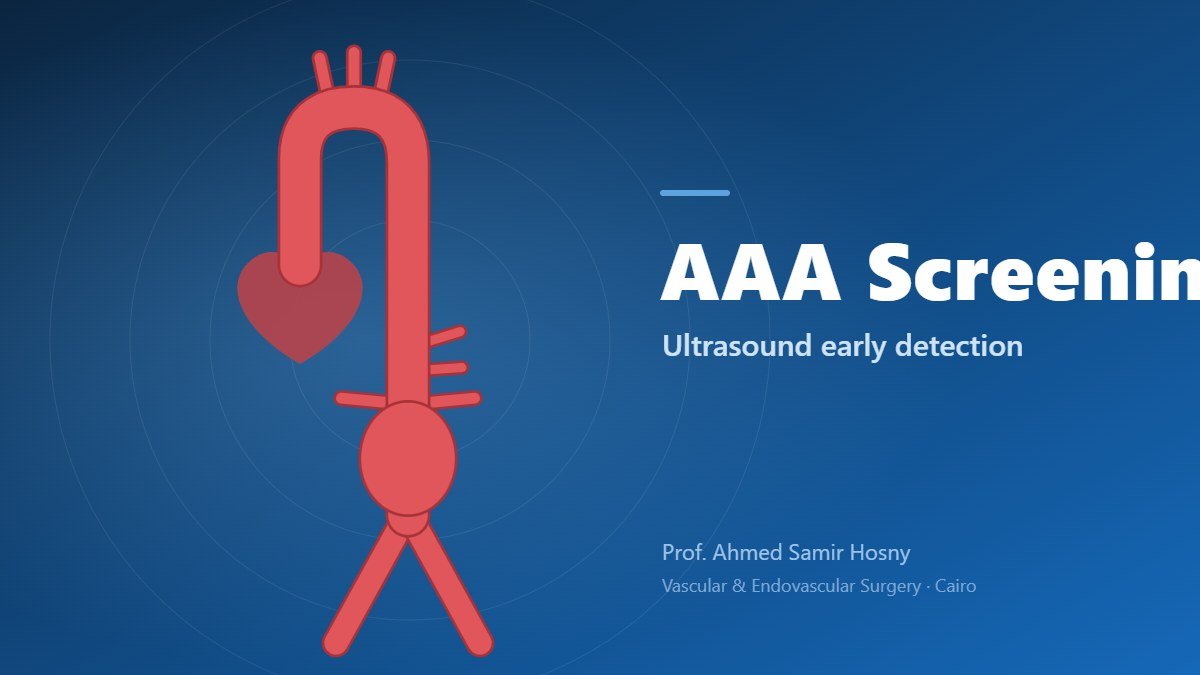
It is an abdominal ultrasound scan that usually takes less than 15 minutes, with no needles, contrast or radiation. Fasting for a few hours beforehand reduces bowel gas and improves the view.
What does the result mean?
- Below 3 cm: normal; usually no need to repeat.
- 3–4.4 cm: small aneurysm needing regular surveillance (usually every 1–3 years depending on size).
- 4.5–5.4 cm: medium aneurysm needing closer surveillance (every 3–6 months to a year) and specialist review.
- 5.5 cm or more in men (5 cm in women): usually needs repair with a stent-graft or surgery.
Risk factors
- Smoking — the strongest risk factor.
- Age over 65 and male sex.
- Family history.
- High blood pressure, high cholesterol and atherosclerosis.
After finding a small aneurysm
Stopping smoking is the single most important step to slow growth. Add blood pressure control, usually statin and antiplatelet therapy, regular physical activity and keeping to your ultrasound schedule.
Frequently asked questions
Is the test painful or risky?
No, it is a standard ultrasound with no pain or radiation.
Do I need to repeat the test if it is normal?
If the aorta is normal after age 65, repeat screening is usually not needed unless your doctor advises otherwise.
Can I feel an aneurysm with my hand?
Sometimes a strong pulsation is felt in the abdomen, especially in slim people, but examination is not enough — ultrasound is the standard.
Minutes of ultrasound can prevent a moment of emergency — ask your doctor about screening after 65.
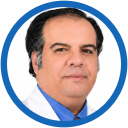
Prof. Ahmed Samir Hosny
Professor of Vascular & Endovascular Surgery — Kasr Al Ainy, Cairo University
Professor of Vascular & Endovascular Surgery at Kasr Al Ainy, Cairo University. Fellowship in peripheral endovascular interventions (Kiel, Germany) and aortic surgery fellowship (Cologne, Germany); Member of the Royal College of Surgeons of Edinburgh.
Meet the doctor