On this page
Diameter and rupture risk
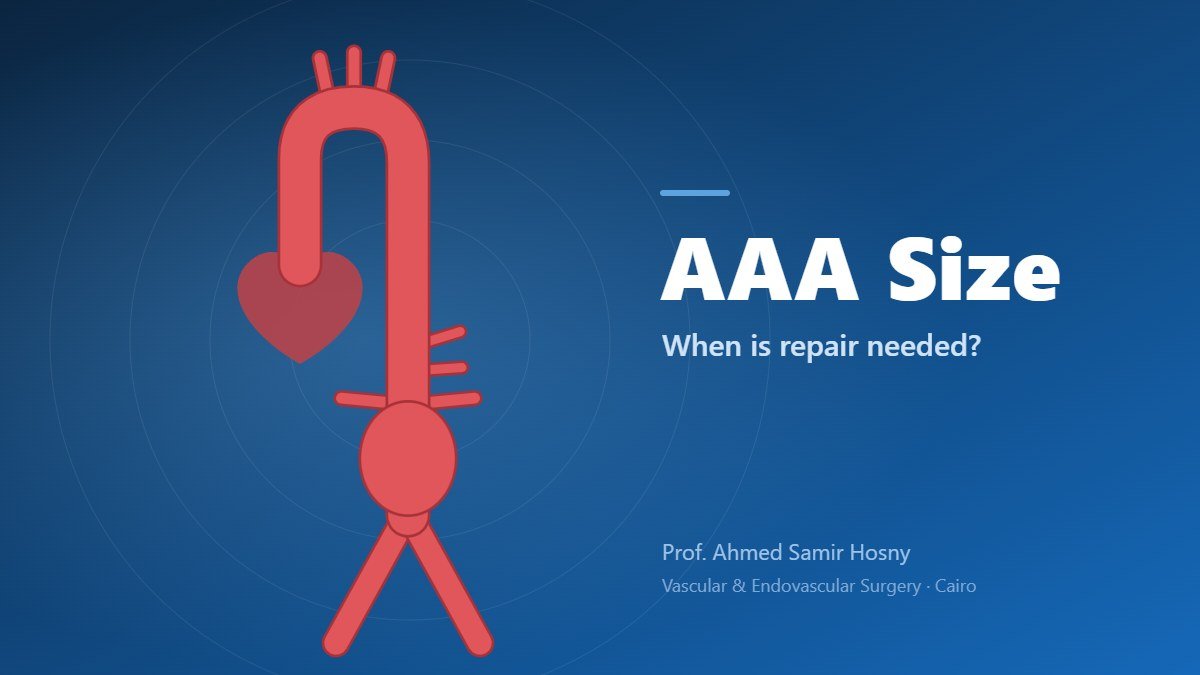
The normal abdominal aorta is about 2 cm wide and is considered aneurysmal above 3 cm. In small aneurysms the rupture risk is very low and the risks of surgery outweigh its benefit, so surveillance is preferred. As the aneurysm approaches 5.5 cm, rupture risk rises to the point where repair becomes the safer choice.
When do we recommend repair?
- When the diameter reaches 5.5 cm in men.
- When the diameter reaches 5.0 cm in women, whose rupture risk is higher at the same size.
- With rapid growth: more than 1 cm per year.
- When symptoms such as aneurysm-related abdominal or back pain appear.
- Saccular (pouch-shaped) aneurysms may be repaired at smaller sizes.
Surveillance intervals
- 3–3.9 cm: ultrasound about every 2–3 years.
- 4–4.9 cm: ultrasound about every year.
- 5–5.4 cm: every 3–6 months while planning treatment.
Intervals vary slightly between guidelines and according to each patient.
How can you slow aneurysm growth?
- Stop smoking — by far the most important factor.
- Control blood pressure.
- Statins and antiplatelet therapy to protect the heart and arteries.
- Regular moderate physical activity.
No medication has yet been proven to reliably stop aneurysm growth, so surveillance remains essential.
Frequently asked questions
Can an aneurysm shrink?
It does not shrink on its own, but its growth can be slowed.
Does a small aneurysm stop me exercising?
No. Moderate exercise is beneficial; just avoid very heavy weightlifting.
Should I wait until 5.5 cm even if I am worried?
Studies show that early repair of small aneurysms does not improve outcomes, and regular surveillance is very safe.
A small aneurysm is no cause for panic — it calls for commitment to follow-up and stopping smoking.
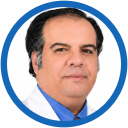
Prof. Ahmed Samir Hosny
Professor of Vascular & Endovascular Surgery — Kasr Al Ainy, Cairo University
Professor of Vascular & Endovascular Surgery at Kasr Al Ainy, Cairo University. Fellowship in peripheral endovascular interventions (Kiel, Germany) and aortic surgery fellowship (Cologne, Germany); Member of the Royal College of Surgeons of Edinburgh.
Meet the doctor