On this page
What is an iliac artery aneurysm?
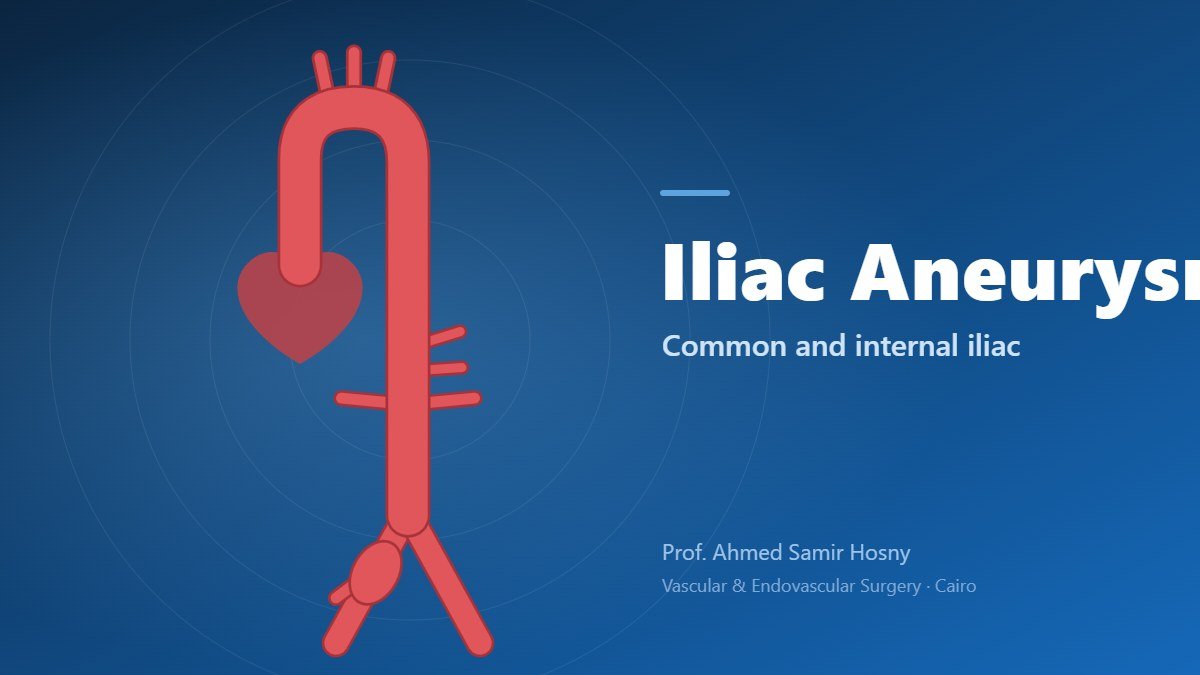
It is an abnormal widening of the common or internal iliac artery. A normal common iliac artery is about 1–1.5 cm wide and is usually considered aneurysmal above 1.8–2 cm. Many cases occur together with an abdominal aortic aneurysm.
Symptoms
- Usually none.
- When large, it may press on nearby organs, causing pelvic or lower abdominal pain, urinary symptoms, constipation, pain spreading to the thigh, or leg swelling from vein compression.
- Sudden severe pain with low blood pressure may mean rupture and needs emergency care.
Diagnosis
It can be seen on ultrasound, but contrast CT is the most accurate test for measuring the diameter and its relation to the aorta and to the internal and external iliac arteries — the basis of treatment planning.
When does it need treatment?
Repair is usually recommended when the common iliac artery reaches 3.5 cm or more, or with rapid growth or symptoms. Smaller aneurysms are monitored with imaging while risk factors are controlled.
Treatment options
- Covered stent-graft: the first choice for most patients, either a stand-alone iliac graft or as part of EVAR.
- Iliac branch device (IBD): to preserve blood flow to the internal iliac artery.
- Coil embolisation of the internal iliac artery in selected cases when it cannot be preserved.
- Open surgery in selected cases.
Frequently asked questions
Is an iliac aneurysm as dangerous as an aortic aneurysm?
It can rupture if it grows large, but this usually happens at large diameters, so surveillance and timely repair prevent the danger.
Can it be treated without surgery?
Yes, most cases are treated through a catheter from the groin.
Do I need my aorta checked as well?
Yes. Iliac aneurysms often accompany an aortic aneurysm, so the whole aorta should be imaged.
An iliac aneurysm is usually silent — precise CT imaging is the key to the right plan.

Prof. Ahmed Samir Hosny
Professor of Vascular & Endovascular Surgery — Kasr Al Ainy, Cairo University
Professor of Vascular & Endovascular Surgery at Kasr Al Ainy, Cairo University. Fellowship in peripheral endovascular interventions (Kiel, Germany) and aortic surgery fellowship (Cologne, Germany); Member of the Royal College of Surgeons of Edinburgh.
Meet the doctor