On this page
Causes and risk factors
- Atherosclerosis, high blood pressure and smoking.
- Chronic aortic dissection, which weakens and widens the wall over time.
- Inherited connective tissue disorders such as Marfan syndrome.
- A family history of aortic aneurysm.
Classification
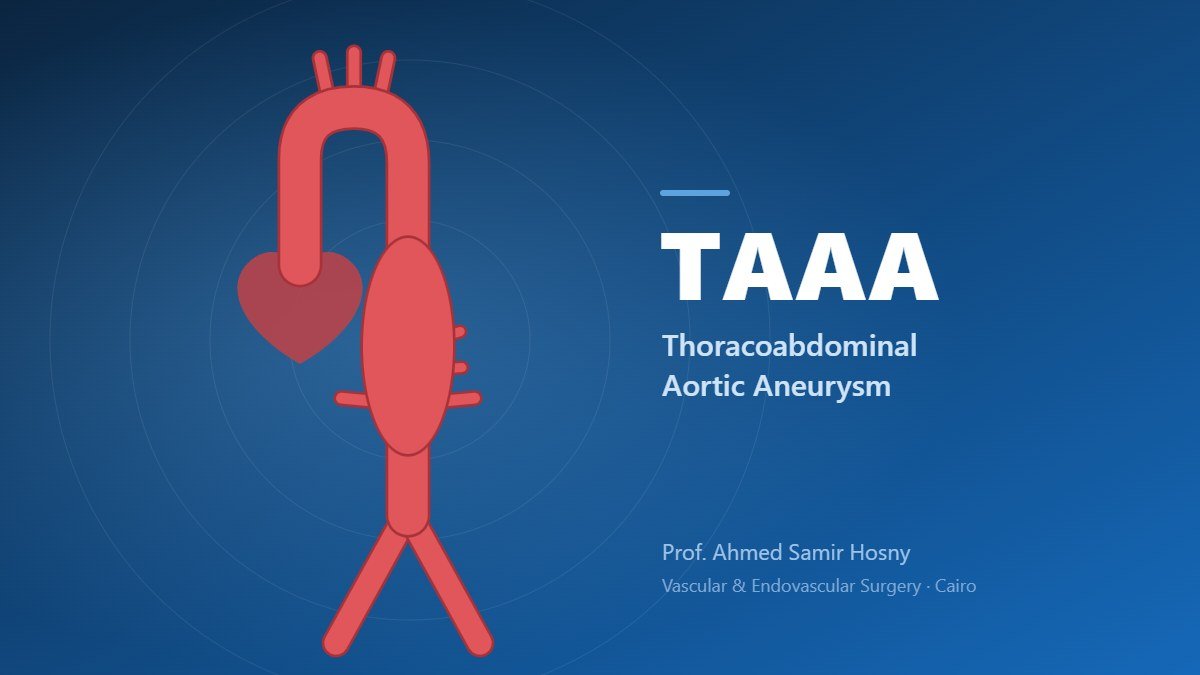
Aneurysms are classified by extent (Crawford types I–V): some involve most of the descending thoracic and the entire abdominal aorta (type II, the most extensive), while others start in the mid or lower chest. The type determines the risk and the treatment plan.
Symptoms
There are often no symptoms, and the aneurysm is found incidentally on a scan done for another reason. Symptoms may include back, chest or abdominal pain, hoarseness, or difficulty swallowing or breathing due to pressure on nearby structures. Sudden severe pain may mean rapid expansion or rupture and needs emergency care.
When is intervention needed?
Usually when the diameter reaches about 6 cm, or less in patients with connective tissue disease, or with rapid growth or symptoms. Until then it is monitored with imaging, alongside blood pressure control and stopping smoking.
Treatment options
- Open surgery: replacing the aneurysmal segment with a graft and reimplanting the organ arteries, performed in specialist centres.
- Off-the-shelf branched grafts (T-Branch): suitable for many patients and for urgent cases.
- Custom fenestrated or branched grafts (FEVAR/BEVAR): manufactured to the patient’s measurements.
Frequently asked questions
Can it be treated with medication alone?
Medication slows progression and protects the wall by controlling blood pressure, but it does not remove the aneurysm; once large, it needs repair.
Is it hereditary?
There may be a genetic predisposition, so screening first-degree relatives is advised in some cases.
What are the main risks of treatment?
Spinal cord ischaemia and effects on kidney function; a specialist team takes preventive steps to minimise them.
Finding an aneurysm early allows calm, planned treatment instead of emergency intervention.
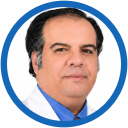
Prof. Ahmed Samir Hosny
Professor of Vascular & Endovascular Surgery — Kasr Al Ainy, Cairo University
Professor of Vascular & Endovascular Surgery at Kasr Al Ainy, Cairo University. Fellowship in peripheral endovascular interventions (Kiel, Germany) and aortic surgery fellowship (Cologne, Germany); Member of the Royal College of Surgeons of Edinburgh.
Meet the doctor